
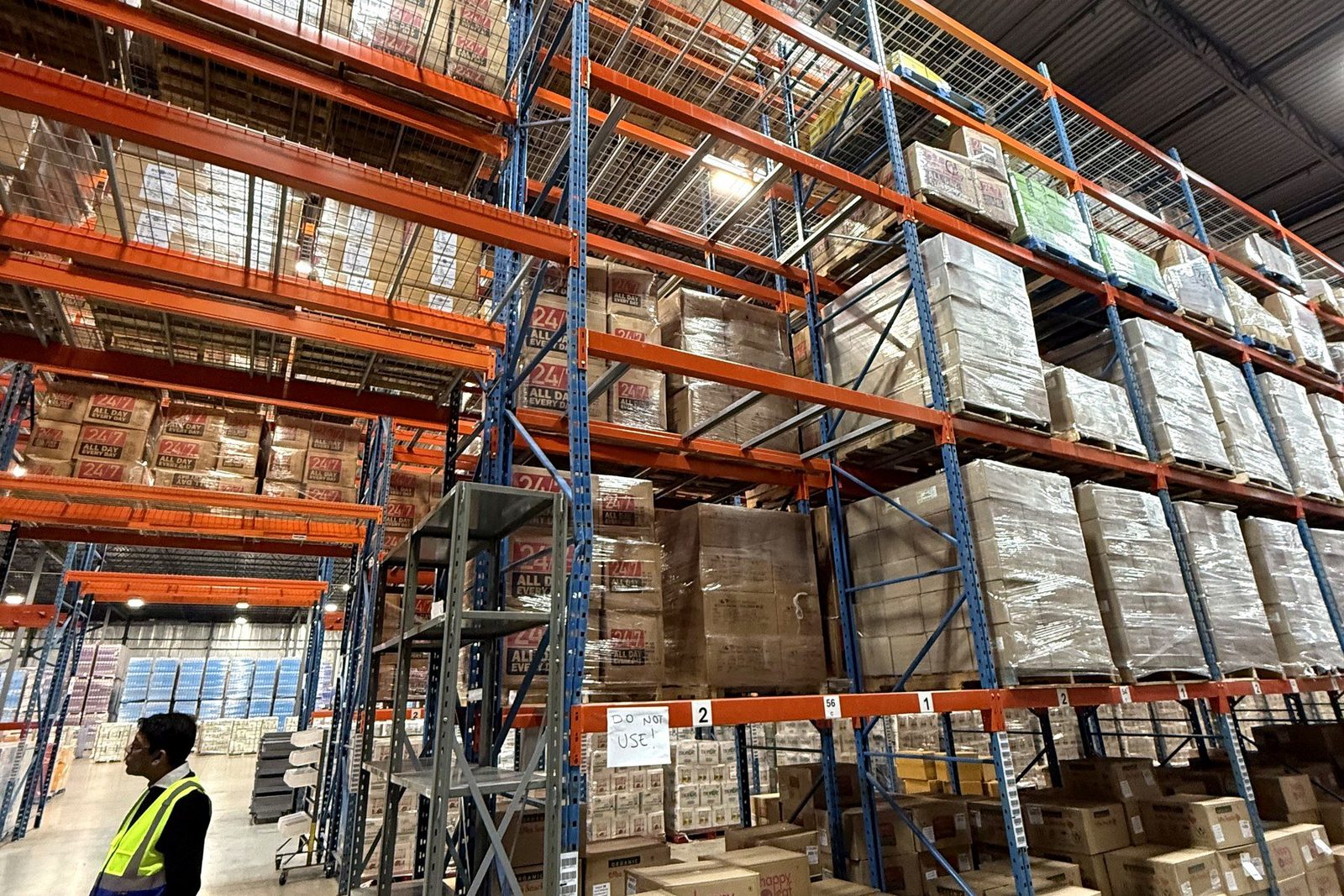
Why 416?
Three honest comparisons. National chains have no GTA office. Day-rate sub-contractors have no skin in the game. DIY-from-Kijiji has no engineering. Here’s the side-by-side.
Not bashing. Trade-offs.
This page isn’t a hit-piece on the other ways to get pallet racking into a GTA warehouse. National chains, day-rate sub-contractors, and DIY-from-Kijiji are all real options and they all make sense in some context. We’ve worked alongside the first two and we’ve cleaned up after the third.
What this page is: an honest list of the trade-offs a Toronto warehouse manager should think through before signing. The wrong path on the wrong project costs you in re-anchors, MLITSD orders, insurance disputes, and weeks of lost capacity. The right path on the right project saves real money.
416 is built around one thing — being the GTA team that owns the rack install end-to-end, from stamped drawing to anchor torque to inspection. Everything below is that lens applied honestly to the alternatives.
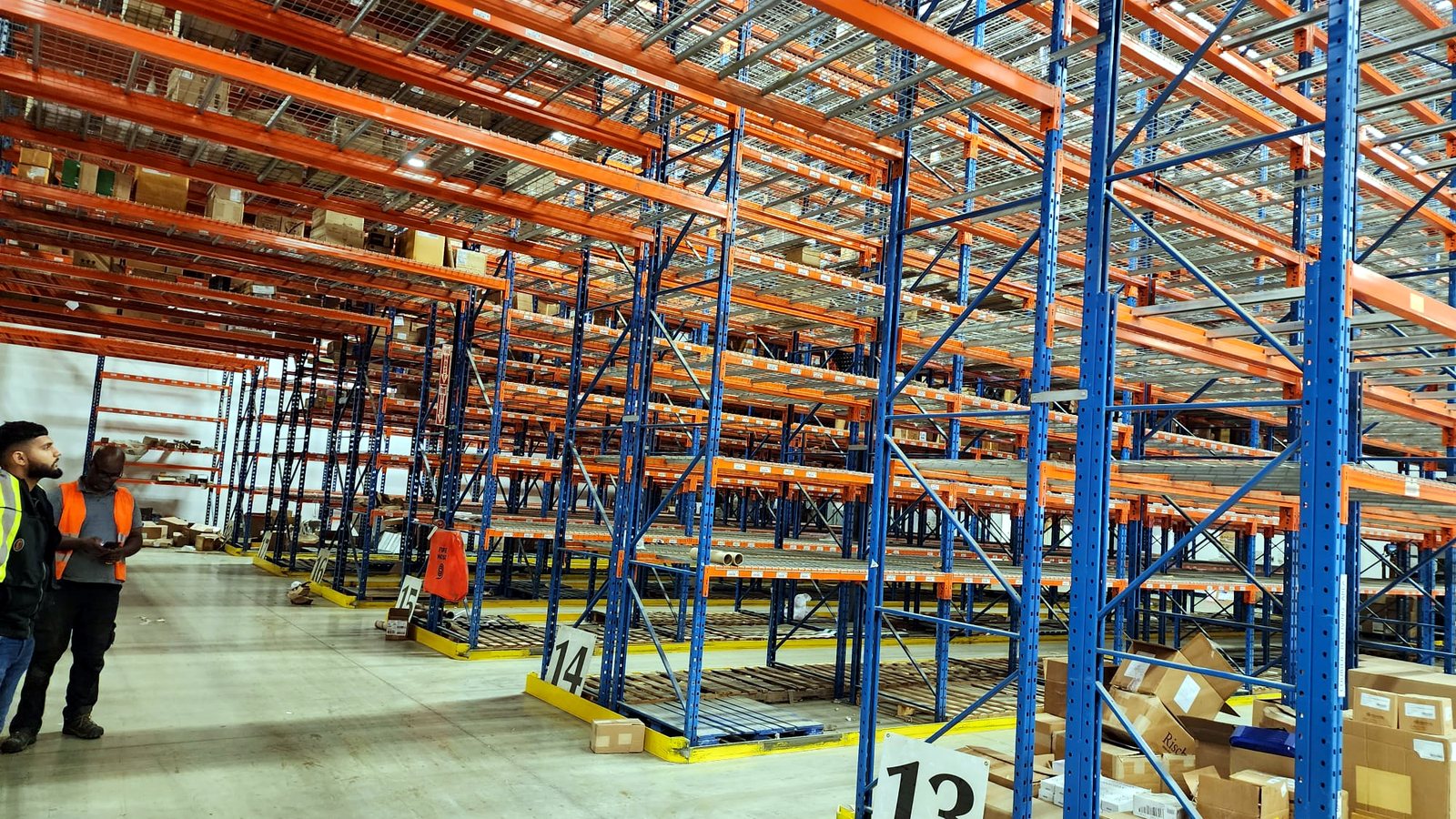
One crew, end to end.
Local GTA, since 2011
Toronto-based office, GTA-only field crews. Not a dispatch from out-of-province.
Salaried crew
Full-time install team on payroll. Not day-rate. Same crew shows up on the warranty call.
P.Eng of record
Sealed structural drawings where the job calls for them — mezzanines, permit packages, re-certifications — not a hand-wave reference to a manufacturer catalog.
CSA A344-17 aligned
Design, install, and inspection all tied to the national standard for Canadian rack systems.
Same-day repair response
Phone acknowledged same day. On-site within 24–48 hours for safety-critical damage. No regional dispatch queue.
Side-by-side.
Nine capabilities most warehouse managers actually care about. Category-level honest. No competitors named.
| Capability | 416 Industrial Toronto-based · since 2011 |
National Chains HQ outside the GTA |
Day-Rate Sub-Contractors Hired by the day |
DIY / Used-from-Kijiji Self-sourced + self-installed |
|---|---|---|---|---|
| Local GTA presence | Yes. Toronto-based since 2011, GTA-only field crews. | Variable — often no GTA office, dispatched from out-of-region. | Labour only — local labour available, but no engineering or office presence. | N/A — no vendor presence; you are the vendor. |
| Crew model | Salaried full-time. Same crew on payroll — installs + warranty calls + repairs. | Hybrid — salaried HQ staff plus sub-contracted field labour locally. | Day-rate — paid per project. No continuity between install and follow-up. | You + helpers — you and whoever you can hire on the day. |
| Engineering — stamped drawings | Yes · P.Eng of record. Sealed structural drawings on mezzanines, permit packages and re-certifications; signed inspection reports. | Yes — engineering available, typically HQ-based with longer turnaround. | No — labour only; engineering not part of the deliverable. | No — you source it separately or proceed without it. |
| CSA A344-17 alignment | Yes. Design, install, and inspection all tied to the standard. | Yes — standard typically aligned by the engineering team. | Variable — depends on the individual crew’s training and habit. | No — no structured alignment to the standard. |
| Same-day emergency response | Yes. Phone acknowledged same day, on-site within 24–48 hrs for safety-critical damage. | Multi-day — regional dispatch queue, typically multiple business days. | Variable — depends on whether the same crew is still on contract. | N/A — no external response; you handle it. |
| Single project manager | Yes · named PM. One PM from quote to install to warranty. Same phone number. | Hand-offs — often passes between sales, scheduling, and on-site lead. | No — no PM role; direct labour transaction. | You — you are the PM. |
| Insurance + liability | Fully insured · WSIB. WSIB registered employer, full general liability, certificate available on request. | Yes — typically carries full corporate insurance. | Variable — depends on the individual contractor’s policy and renewal status. | You carry it — liability sits on the building owner / operator. |
| After-install support | Warranty + inspection. Written warranty, annual inspection available, repair line answered. | Variable — depends on the regional office’s bandwidth at the time of the call. | None — day-rate engagement ends when the truck leaves. | None — you own it forever. |
| Pricing transparency | Itemized written quote. Line-item quote — frames, beams, decking, install hours, freight all broken out. | Yes — typically itemized, though formats vary regionally. | Per-day labour — quoted as labour day-rate. Parts sourced separately. | Self-sourced — you set the budget, and own every cost variance. |
There is no universal answer.
Each path is the right call somewhere. Here’s our honest read on where.
If you’re standardizing across 20 sites
National chains make sense if you’re a national logistics group rolling the same rack spec across 20 facilities in 8 provinces. The corporate-procurement layer earns its keep at that scale. For a single GTA install, that overhead is buying you nothing.
If it’s a single-bay handyman patch
Day-rate makes sense for a single-bay patch where the engineering is already done, the parts are already on site, and you just need hands and a torque wrench for an afternoon. For anything that touches structural capacity or layout, the cost of getting it wrong dwarfs the day-rate savings.
If you’re a startup with one rack in a garage
DIY makes sense for a startup with one rack in a garage where the load is light, the slab is residential, and the consequences of a tip-over are personal property. For a commercial slab with employees and product underneath, it isn’t a saving — it’s a liability bet.
If the install is on a GTA slab
416 makes sense when the install is on a GTA slab and the consequences of getting it wrong matter — to your insurer, your employees, your MLITSD record, or your product. Local team, stamped engineering, salaried crew, one PM from quote to warranty.
Questions we hear most.
Is 416 cheaper than a day-rate sub-contractor?
On the labour line alone, a day-rate crew can look cheaper — you are paying for hands and a torque wrench for the afternoon, nothing else. The 416 number includes the stamped engineering, the project management, the insurance, and the after-install warranty that a day-rate engagement does not. For a single-bay patch where the engineering is already done and the parts are on site, day-rate may genuinely win. For anything that touches structural capacity or layout, the cost of getting it wrong dwarfs the day-rate savings.
Do national chains do anything 416 can’t?
Yes — if you are a national logistics group rolling the same rack spec across 20 facilities in 8 provinces, a national chain’s corporate-procurement layer earns its keep at that scale. What that layer cannot do is keep one salaried crew and one named project manager on your single GTA install from quote to warranty. National engineering is typically HQ-based with longer turnaround, and emergency response runs through a regional dispatch queue measured in business days rather than hours.
Why not just buy used racking off Kijiji and install it ourselves?
For a startup with one light-duty rack in a garage on a residential slab, DIY-from-Kijiji is a reasonable call — the consequences of a tip-over are personal property. On a commercial slab with employees and product underneath, self-sourced and self-installed racking carries no engineering, no CSA A344-17 alignment, no insurance behind it, and no after-install support. The liability sits entirely on the building owner. It isn’t a saving at that point — it’s a liability bet. We have cleaned up after that bet more than once.
What does “P.Eng stamped” actually cover on a 416 install?
The stamp is contextual to the structural deliverable — it is not a blanket label we apply to every line of a quote. Where the job calls for sealed engineering — mezzanines, municipal permit packages, used-racking re-certifications — the drawing set is sealed by our P.Eng of record, with layout and load specification for the system as designed and anchored, not a hand-wave reference to a manufacturer catalog. Inspection reports are signed and MLITSD-ready.
How fast can 416 respond if a forklift hits a frame?
Phone acknowledged the same day, on-site within 24–48 hours for safety-critical damage on active GTA accounts — no regional dispatch queue. Because the same salaried crew that installed the system handles the repair, the person who shows up already knows your layout. Call (647) 692-4416 and ask for the emergency desk.
Want a quote you can compare?
Send your warehouse dimensions + use case. 416 returns an itemized, line-item written quote — frames, beams, decking, install hours, freight all broken out. Compare it against anyone.
60 seconds · no obligation · across the GTA · (647) 692-4416