
Pallet racking for automotive parts, from long stock to small-SKU pick faces.
Salaried 416 crew — engineered design, supplied product, installed by the same team that signs the inspection. Cantilever for bumpers and exhausts, selective and VNA for the small-part wall. CSA A344-17 aligned.
Automotive storage is two warehouses in one.
An automotive parts operation is really two storage problems sharing a roof. On one side you have long, awkward stock — exhaust pipes, bumpers, body panels, leaf springs, windshields and trim mouldings — that no standard pallet beam will hold. On the other side you have tens of thousands of small, fast-moving SKUs: filters, sensors, brake pads, belts, fasteners and electrical parts that turn over by the hour. The racking that wins for one is wrong for the other.
416 specs automotive warehouses as a layout, not a single product. Cantilever for the long-and-light stock, selective or VNA for the high-SKU pick wall, and structural rack where forklift traffic and line-side staging demand it — all designed, supplied and installed by the same in-house crew, then inspected to CSA A344-17.
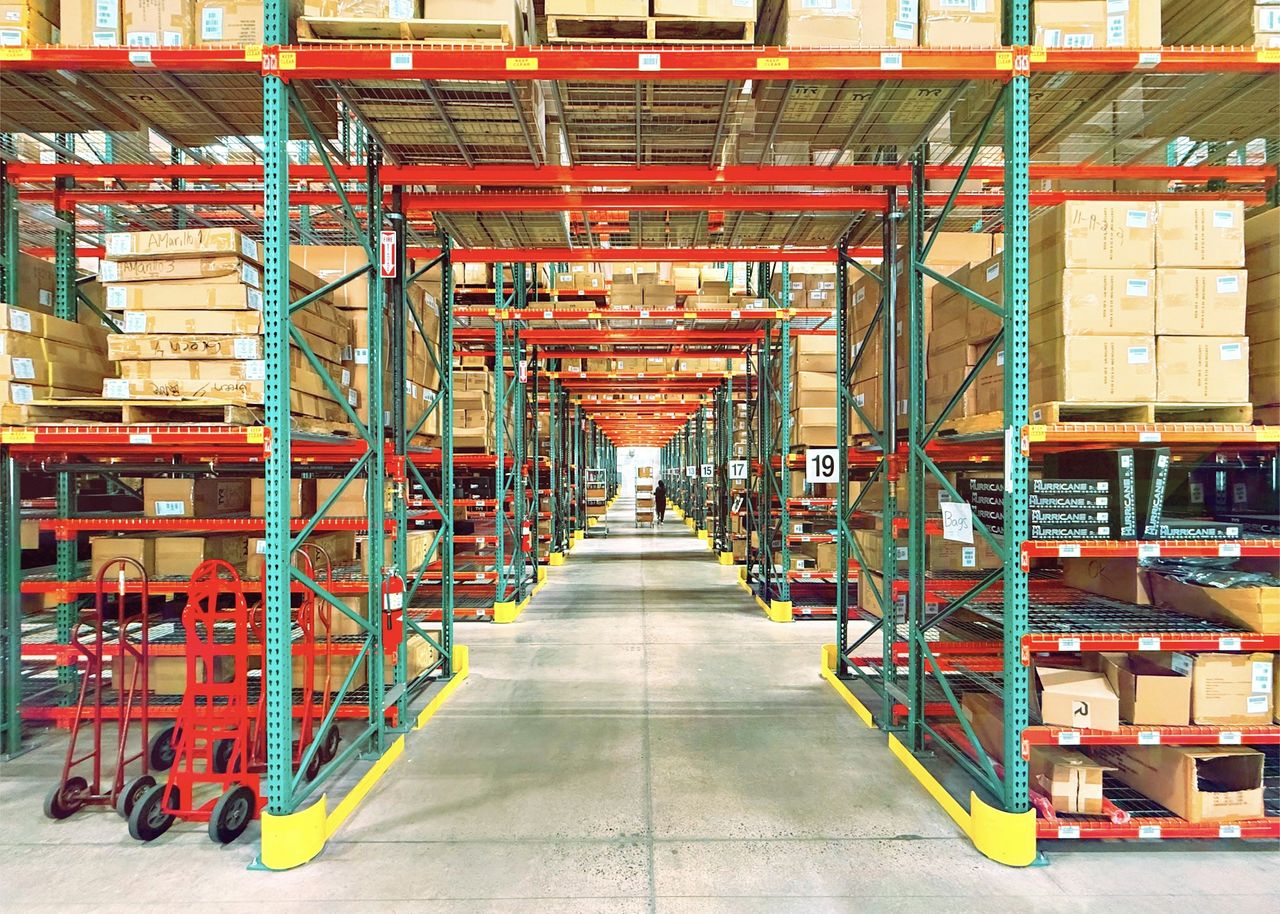 STOCK · racked components in an industrial warehouse · real 416 job photos rolling out
Five problems specific to auto parts.
Long stock has nowhere to go on pallet beams
Exhausts, bumpers, leaf springs and trim are long and light. Cantilever arms carry them without the wasted cube and damage that comes from forcing them onto selective racking.
Small-SKU density is the daily economics
An aftermarket warehouse can carry tens of thousands of line items. Narrow-aisle (VNA) or tight selective with carton flow puts more pick faces per square foot without slowing the order picker.
Line-side and mixed traffic damage uprights
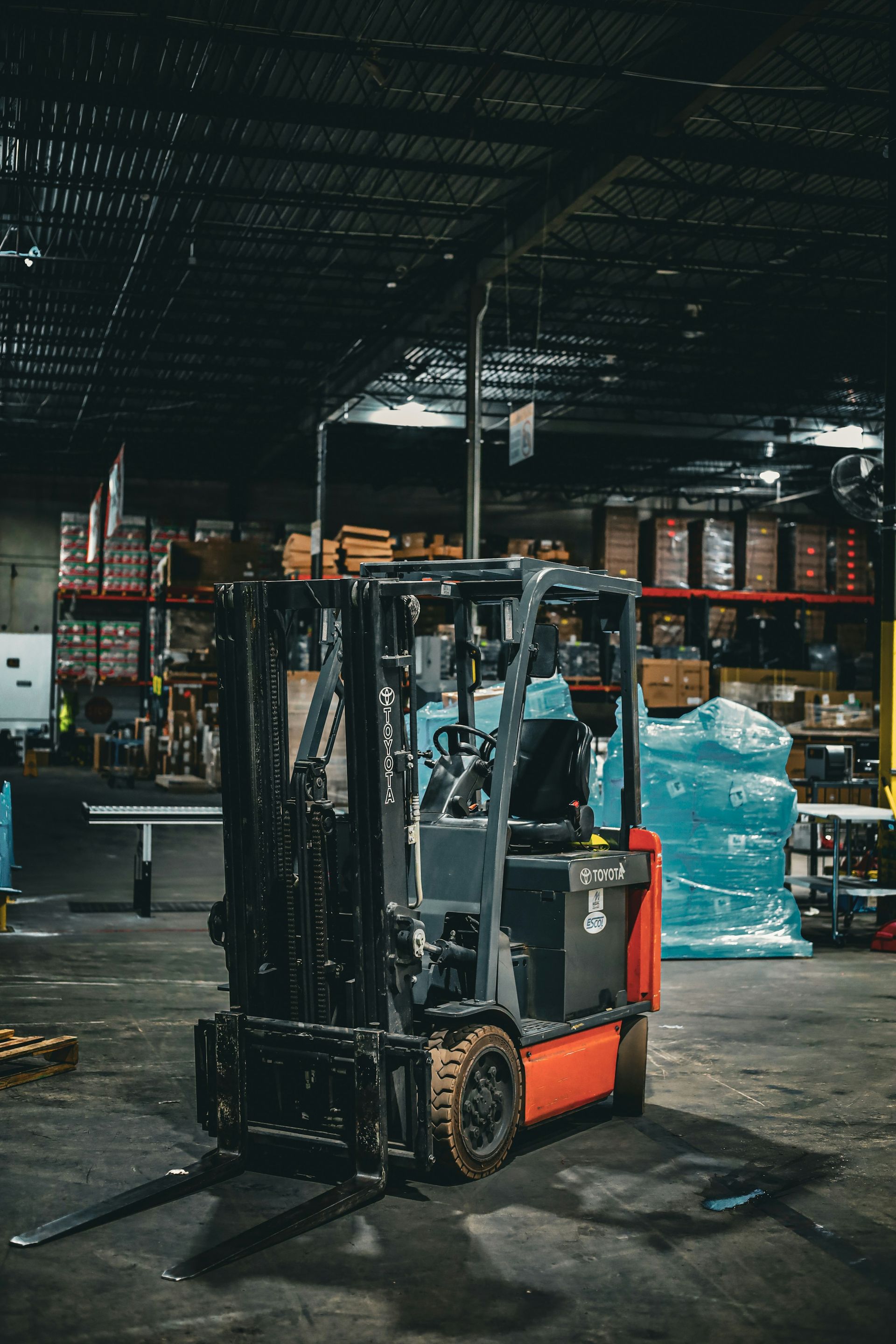
Counterbalance trucks, reach trucks, tuggers and foot traffic share the same aisles. Frames take hits. Column guards, end-of-aisle protection and a real repair plan keep the system rated.
Heavy components need engineered load ratings
Engines, transmissions, brake rotors and batteries are dense. Beam and frame capacity has to be designed for the real load, not assumed — with ratings confirmed by the engineer of record where required.
Inventory grows, models change, layouts move
Model-year turnover and SKU churn mean the rack that fits today gets reconfigured. A system designed for relocation and add-on beats one that has to be torn out.
What we'd spec for automotive.
Each link goes to the full spec page — capacity tables, install patterns, CSA-alignment notes.
Cantilever
Arms instead of beams for exhausts, bumpers, body panels, springs and trim. The default for long-and-awkward automotive stock.
Spec →VNA / Narrow-Aisle
Tighter aisles, more pick faces per square foot. For high-line-item aftermarket and small-part inventories.
Spec →Selective Pallet
Every pallet accessible. The workhorse for the small-part pick wall, fast movers and mixed automotive SKUs.
Spec →Push-Back
Two-to-six-deep lanes for slower bulk SKUs and seasonal stock without giving up too many selective faces.
Spec →Drive-In
Deep-lane bulk storage for same-SKU tyres, batteries and fluids where cubic-foot density beats selectivity.
Spec →Mezzanines
A second level for small-part shelving and slow-moving inventory. Engineer-stamped drawings where required.
Spec →Not sure where to start? Browse the full catalog of systems and specs, or have us recommend a layout from your floor plan.
One crew, start to stamped.
The same salaried team designs, supplies, installs and inspects your automotive system — no subcontractors, no runaround. The face at the quote is the face on site.
Layout the whole floor
We design and engineer the cantilever rows, pick wall and bulk zones together — one layout, not three products bolted side by side.
We source and stand it up
We supply the steel and install with our own crew. New or quality used racking where the budget calls for it.
Checked, not assumed
Annual inspections and signed reports to CSA A344-17, with a Pre-Start Health and Safety Review where new or modified racking triggers O. Reg. 851.
Keep it rated after the hit
Damaged uprights get repaired or replaced — not ignored. Same-day acknowledgement on emergency repair calls across the GTA.
Move with the model year
When SKUs change or you outgrow the building, we tear down, move and rebuild the system instead of starting over.
Documentation and resupply
Permitting support where required, plus reorder parts and a buy-back on surplus rack you no longer need.
Documented for automotive.
CSA A344-17
The Canadian standard for the design, installation, use and inspection of steel storage racking. 416 designs and installs aligned to it and inspects against it — including cantilever and structural systems.
ANSI MH16.1 / RMI
The Rack Manufacturers Institute standard that underpins much of the load-rating engineering. Relevant where components are specified or rated against MH16.1 design rules.
O. Reg. 851 & Pre-Start Reviews
Ontario's Industrial Establishments regulation. New or modified racking can trigger a Pre-Start Health and Safety Review, with a signed report kept on file for the Ministry.
MLITSD-ready inspection reports
Inspection findings are documented in a format ready for the Ministry of Labour, Immigration, Training and Skills Development and for your own internal health-and-safety records.
Note: 416 designs and installs to documented standards. Specific clause interpretation and stamped load ratings belong to the registered professional engineer of record on your project where one is required — we provide the alignment and documentation, you confirm the regulatory fit with your in-house compliance team.
Automotive racking, answered.
What's the best racking for long automotive stock like exhausts and bumpers?
Cantilever. Long, light, awkward items — exhaust pipes, bumpers, body panels, leaf springs, trim and mouldings — sit on cantilever arms rather than between pallet beams, which removes the wasted cube and the handling damage you get from forcing them onto selective racking. We'd typically spec cantilever for that stock and a separate selective or VNA zone for the small-part SKUs.
How do you handle a warehouse with tens of thousands of small parts?
Density and pick speed both matter for aftermarket and OEM small-part inventories. Narrow-aisle VNA packs more pick faces into the same footprint, while tight selective keeps every position accessible for fast movers. We design the two together so the order picker isn't fighting the layout. Browse the full system catalog for capacity tables.
Do you engineer load ratings for heavy components like engines and batteries?
Yes. Engines, transmissions, brake rotors and batteries are dense, so beam and frame capacity is designed for the real load rather than assumed. Where a project requires it, load ratings are confirmed and stamped by the professional engineer of record. We provide the design, supply, install and the documentation that supports it.
Our forklifts keep hitting the uprights. Can you fix damaged frames?
Yes. Mixed traffic — counterbalance trucks, reach trucks, tuggers and foot traffic in shared aisles — means frames take hits. We repair or replace damaged uprights rather than leave them de-rated, add column guards and end-of-aisle protection, and provide same-day acknowledgement on emergency repair calls across the GTA. Ongoing inspections catch damage before it becomes a failure.
Do you serve automotive warehouses across the Greater Toronto Area?
Yes. 416 has worked across the GTA since 2011 with one salaried in-house crew and no subcontractors, including Mississauga, Brampton, Vaughan and Toronto — the corridors where most automotive parts distribution sits. Send a floor plan through get a quote and we'll come back with a recommendation.
Automotive case study coming soon
We're working with a recent automotive client on case-study permissions. In the meantime, the case-studies index has reference projects across multiple industries.
Need an Automotive racking quote?
Send a floor plan and your SKU profile — long stock, small parts, heavy components — and we'll come back with a layout, engineer-stamped drawings where required, and an install timeline within 5 business days.