








How we grade used racking
Grades describe what the steel looks like. They don’t rate capacity.
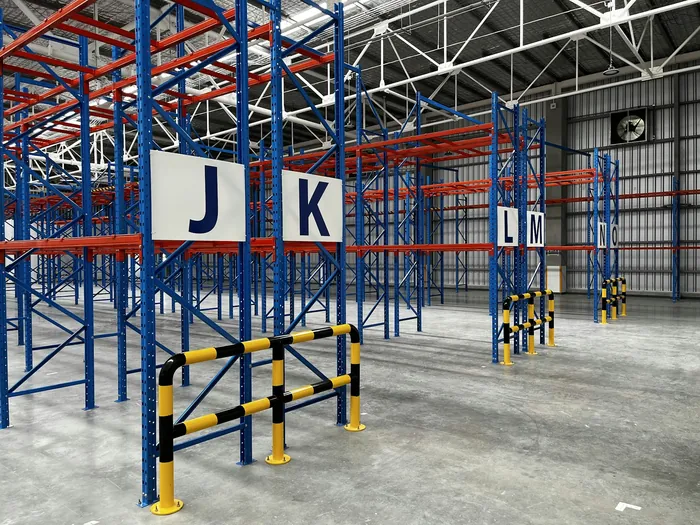
| Grade A | Straight and clean. Light scuffs at most, paint mostly intact. |
|---|---|
| Grade B | Straight. Visible scuffs, label residue or paint loss. |
| Grade C | Straight, with heavier cosmetic wear or surface rust. Good for back rows and overflow. |
| Not sold | Anything that fails a check below. |
What we check before a piece is listed
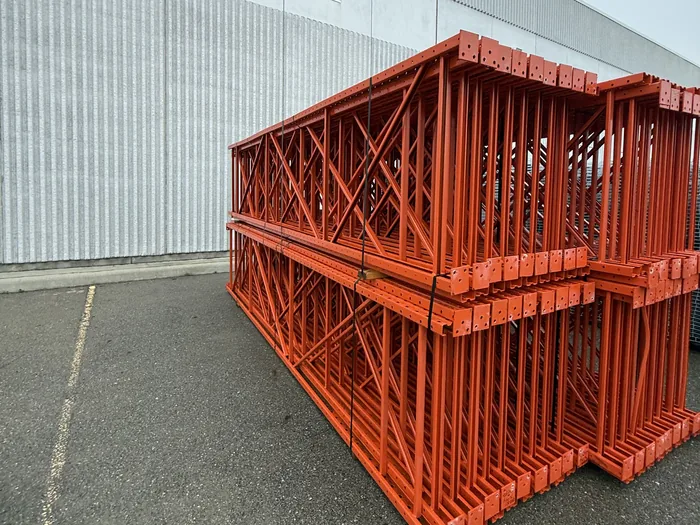
Upright frames
- Columns straight, with no bends, twists, kinks or creases
- Bracing present, straight and not cut
- Welds with no cracks
- Footplates flat, attached and not torn around the anchor holes
- Rust: surface rust is noted in the grade; pitting or flaking steel is not sold
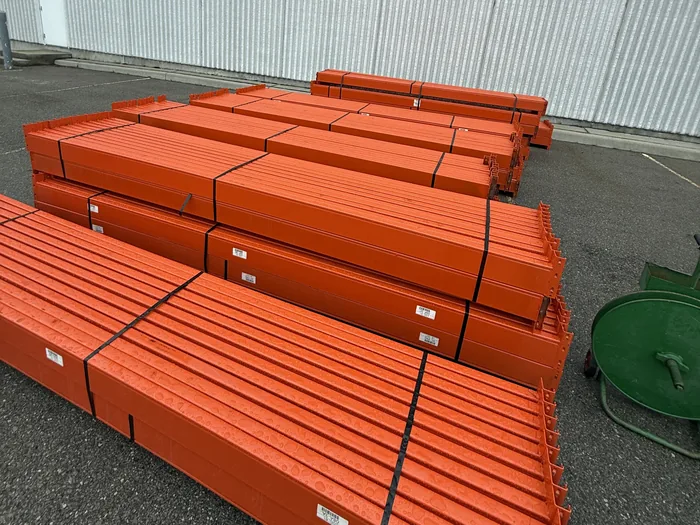
Beams
- Beam straight, with no visible sag or twist
- Connectors not bent, cracked or torn, with rivets or pins in place
- No dents or crushed sections in the beam face
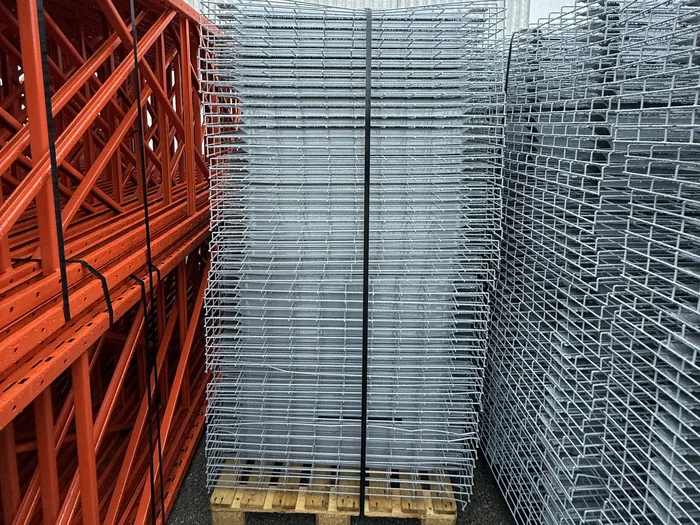
Wire decks
- Support channels not bent
- Mesh welds intact, with no broken wires
Photos
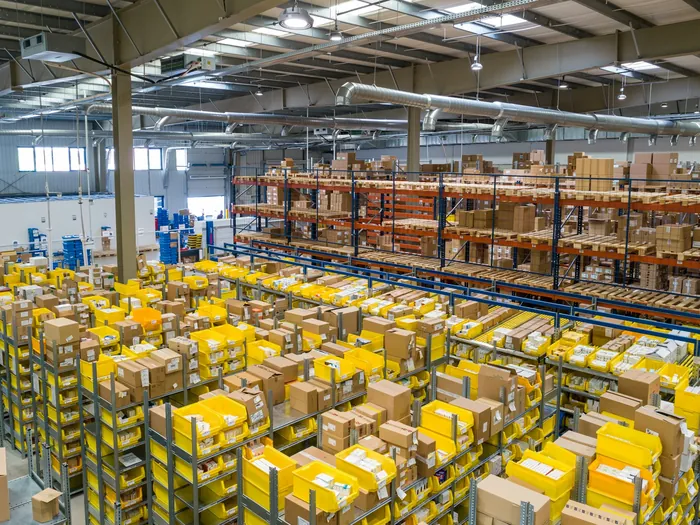
If a listing has photos we took of that stock, it says so. Otherwise the photo is an example from the same lot or of the same type. Ask and we’ll send photos of the pieces you’re buying.
Matching racking you already have
Connector styles and hole patterns vary by manufacturer. Tick “I’m adding to existing racking” on your quote and attach a photo of your beam connector and the holes on your upright. We’ll check the fit before you buy.
What we don’t do
We sell parts. We don’t design, install or certify racking, and our grades are not an engineering assessment. Load capacity depends on the whole system: frame, beam, spacing and anchoring. Check the manufacturer’s load tables, and talk to your installer or an engineer. In Ontario, new or changed racking may need a Pre-Start Health and Safety Review (PSR) before it’s loaded.