
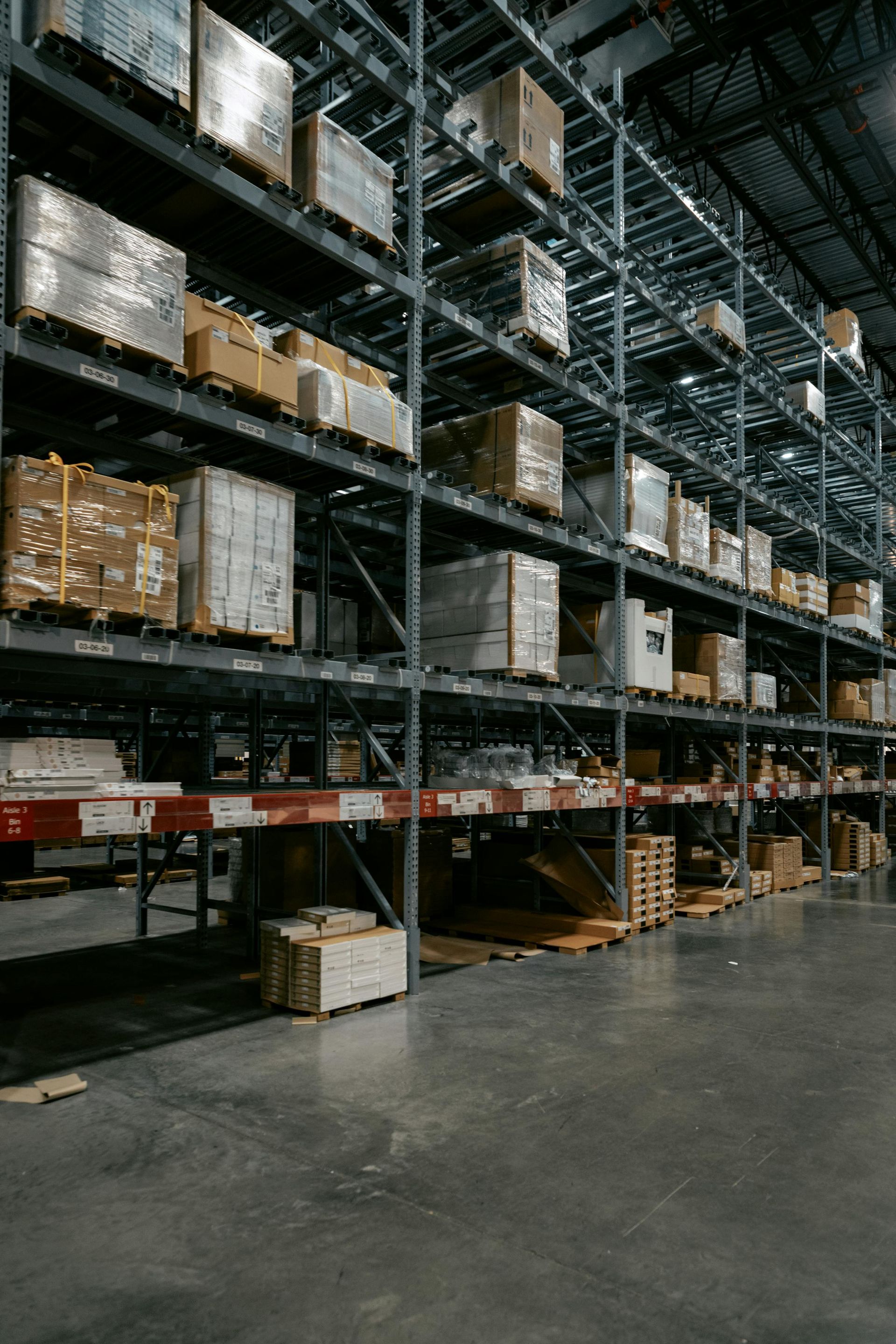
5 signs your racking needs immediate repair.
When racking fails, the consequences can be catastrophic. Here are the five critical warning signs — visible damage, missing safety hardware, corrosion, excess deflection, and overloading — that mean you should restrict access and call for inspection now.
Why these warning signs matter.
Warehouse racking systems are the backbone of efficient material storage and handling. When racking fails, the consequences can be catastrophic—not only do you risk losing inventory and damaging equipment, but more critically, you endanger the lives of your employees. Understanding the warning signs that your racking needs immediate repair is essential for maintaining a safe, productive warehouse environment.
According to the Rack Manufacturers Institute (RMI), structural failures in warehouse racking systems account for numerous workplace injuries and fatalities annually. Many of these incidents are preventable with regular inspection and prompt maintenance. As a facility manager or warehouse operator, you need to know what to look for and when to take action.
In this comprehensive guide, we'll walk you through five critical warning signs that indicate your warehouse racking needs immediate repair. We'll explain what to look for, why each condition is dangerous, and what steps you should take immediately.
If you observe any of the warning signs described in this article, immediately restrict access to the affected racking area and do not store additional inventory until repairs are completed. Do not wait for your next scheduled inspection.
Visible upright bowing or twisting.
One of the most obvious and serious warning signs is when the vertical uprights of your racking system show visible bowing, leaning, or twisting. This distortion can be detected by stepping back and observing the racks from a distance, or by using a straightedge against the uprights.
What to look for
- Uprights that are visibly curved or bent, rather than perfectly straight
- Columns that lean noticeably to one side or another
- A spiral or twisted appearance along the length of the upright
- Gaps between uprights and bracing members
- Visible cracks or permanent deformation in the steel
Why it's dangerous
Uprights are designed to carry vertical loads and resist lateral forces from impact, shifting loads, or seismic activity. When an upright bows or twists, it loses structural integrity and its load-carrying capacity is severely compromised. A single compromised upright can trigger a cascade failure, where the weight previously supported by that upright transfers to adjacent columns, potentially overloading the entire section of racking.
Bowing can result from overloading, impact damage (such as a forklift collision), lateral bracing damage, or material fatigue. Regardless of the cause, continued use creates an immediate hazard.
What to do immediately
- Immediately unload all inventory from the affected section
- Barricade the area to prevent employee access or use
- Take photographs and measurements for your maintenance records
- Contact a qualified racking inspector or your racking manufacturer for assessment
- Do not attempt to straighten or repair uprights without professional guidance
Severity: Critical
Missing beam safety clips, pins, or brackets.
Beam safety clips, pins, and retention devices are critical components that prevent beams from sliding off uprights or shifting laterally. These seemingly small components are the difference between a stable racking system and a potential collapse.
What to look for
- Empty holes or mounting points on uprights where clips should be installed
- Loose, bent, or damaged safety clips that are not properly engaged
- Missing locking pins that secure beams to uprights
- Visible gaps between beams and uprights
- Deteriorated or corroded pins that no longer function properly
- Misaligned beams sitting at an angle rather than level
Why it's dangerous
Beams must be securely attached to uprights to distribute loads properly and maintain system stability. Without proper clips and pins, beams can shift, tilt, or slide off the uprights entirely. A beam that loses its support creates an immediate danger to anyone beneath it and can trigger a cascading failure throughout the racking section.
This is a common failure mode after forklift impact, improper loading practices, or as a result of normal vibration and settling over time. What starts as a missing clip can quickly deteriorate into a major safety problem.
What to do immediately
- Inspect all beam attachment points in the affected section
- Do not use that racking level until all clips and pins are verified and secured
- Have a qualified technician reinstall any missing or damaged hardware
- Keep spare clips and pins on hand for quick replacement
- Establish a monthly inspection routine to check all attachment points
Severity: Critical
Rust and corrosion at base plates and connections.
While warehouses aren't always pristine environments, rust and corrosion on racking components—especially at the base plates where uprights connect to the floor—is a serious red flag that structural integrity is being compromised.
What to look for
- Visible rust or orange/brown discoloration on uprights, especially near the base
- Flaking paint or protective coatings
- Pitting or surface erosion where corrosion has eaten into the steel
- Wet or damp conditions near racking bases that promote rust formation
- Dark staining or discoloration on concrete floor around base plates
- Corrosion on welds, bolted connections, or welded beam attachments
Why it's dangerous
Corrosion reduces the cross-sectional area of steel members, weakening them and reducing their load-carrying capacity. Rust on base plates and connections is particularly dangerous because these areas bear the full weight of the entire racking system above. Even moderate rust can reduce the load capacity by 10-20%, and severe corrosion can reduce capacity by 50% or more.
Base plate corrosion is often caused by moisture from floor cleaning, spills, or condensation. If water is able to pool around the base plates, rust develops rapidly and becomes a structural risk.
What to do immediately
- Dry the affected area thoroughly and improve drainage to prevent re-wetting
- Have a structural engineer assess the extent of corrosion and remaining capacity
- Reduce loads on corroded sections until repairs are completed
- For significant corrosion, plan for component replacement (uprights, base plates, or welded sections)
- Implement moisture control measures: improved floor drainage, dehumidification, or protective coatings
- Inspect other racking systems in your facility for similar corrosion patterns
Severity: High
Beam deflection exceeding the 1/180 span ratio.
Some deflection in loaded beams is normal and expected—steel beams are designed to bend slightly under load. However, excessive deflection indicates overloading or material weakness and is a sign that failure may be imminent.
What to look for
- Beams that visibly sag or droop in the middle when loaded
- A beam that was previously straight but now shows obvious curvature
- Pallets that sit noticeably lower in the middle of a beam than at the ends
- Progressive deflection that worsens over time with the same load
- Deflection that doesn't return to normal after loads are removed
| Beam span | 1/180 deflection limit | Reading above this |
|---|---|---|
| 8 ft (96 in) | 0.53 in | Investigate / reduce load |
| 10 ft (120 in) | 0.67 in | Investigate / reduce load |
| 12 ft (144 in) | 0.80 in | Investigate / reduce load |
Why it's dangerous
The 1/180 span ratio is an engineering standard for acceptable beam deflection. For example, a 10-foot (120-inch) beam should deflect no more than 0.67 inches (120÷180) when carrying its designed load. Deflection exceeding this ratio indicates that the beam is either overloaded or damaged.
Excessive deflection causes several problems: it concentrates stress on attachment points, can damage the beam's paint and protective coating, reduces usable height, and indicates that the system is operating beyond safe parameters. Continued operation will accelerate material fatigue and increase failure risk exponentially.
What to do immediately
- Immediately reduce loads on the affected beam sections
- Measure the actual deflection: use a straightedge and measure tape to check against the 1/180 standard
- Document deflection before and after removing loads
- Have a structural engineer or qualified inspector assess the beam
- Reduce stored weight until inspection is complete and remedial action is taken
- Consider beam replacement if deflection is severe or permanent
Severity: High
Overloaded conditions exceeding capacity plaques.
Every racking system has a clearly labeled load capacity. Exceeding this capacity—even by a small percentage—creates a dangerous situation where the system is operating beyond its design limits.
What to look for
- Capacity plaques that are missing, damaged, or illegible
- Stored weights that exceed the posted capacity per beam or level
- No clear system for weight tracking or verification before storage
- Heavier products being stored in positions designed for lighter items
- Lack of correlation between inventory management system and physical racking capacity
- Signs of stress: bowing, excessive deflection, or noise when loads are stored
Why it's dangerous
Load capacity plaques exist for a reason: they represent the maximum safe load that each beam, level, and section can support. Exceeding these limits creates a situation where the safety factor—the built-in margin between normal operation and failure—is eliminated.
An overloaded system may appear fine for weeks or months, but fatigue damage is accumulating invisibly in the metal. When failure occurs, it happens suddenly and catastrophically. Furthermore, overloading causes the other warning signs we've discussed: accelerated rust development, increased deflection, and component failure.
What to do immediately
- Verify the capacity rating for each racking section (plaques should be visible on uprights)
- Conduct a comprehensive inventory weight audit to determine actual stored loads
- Immediately remove any excess weight beyond the rated capacity
- Redistribute inventory to stay within capacity limits
- Implement a weight verification procedure before storing new inventory
- Train warehouse staff on the importance of capacity limits
- Consider upgrading to higher-capacity racking if your inventory needs exceed current system capacity
- Install or replace capacity plaques if they are missing or illegible
Severity: Medium-High
Key takeaways.
- Schedule formal racking inspections at least annually, or more frequently for heavily-used systems
- Train your team to perform daily visual inspections and report any anomalies
- Maintain detailed records of all inspections, repairs, and modifications
- When in doubt, restrict access and consult a qualified racking professional
- Address warning signs immediately—the cost of repairs is minimal compared to the cost of a racking failure
- Establish a preventive maintenance program to catch issues before they become critical
Your next steps.
If you've identified any of these warning signs in your facility, don't delay. Racking failures are preventable with proper maintenance and immediate response to warning signs. Here's what you should do:
- Document: Take clear photographs and detailed notes of any warning signs you observe.
- Assess: Determine the severity and immediate risk to your operations and employees.
- Restrict: Prevent use of affected racking until repairs are verified.
- Contact: Reach out to a qualified racking professional or your equipment manufacturer for inspection.
- Repair: Implement all recommended repairs promptly.
- Prevent: Establish ongoing inspection and maintenance procedures to catch future issues early.
Your warehouse racking system is a major asset and a critical component of your operation. By staying vigilant and responsive to warning signs, you'll ensure that your facility remains safe, productive, and compliant with Ontario's OHSA, CSA A344-17, and ANSI MH16.1 (RMI) standards.
Have questions about racking safety or inspection procedures? 416 Industrial is here to help. Our team of certified inspectors and experienced technicians can assess your system, identify any issues, and provide cost-effective solutions to keep your warehouse operating safely and efficiently.
Need help? Let our racking safety experts inspect your warehouse.
Let our racking safety experts inspect your warehouse and ensure your system meets all safety standards.
60 seconds · no obligation · across the GTA · (647) 692-4416